Yapahuwa Rock Fortress: A Capital That Lasted Barely a Generation
Rising abruptly from the surrounding plains, Yapahuwa served as the capital of Sri Lanka for a brief but intense period in the late 13th century, when the Sacred Tooth Relic was moved here for safekeeping during a time of South Indian invasions. Its rule as capital lasted only around two decades, but the rock fortress it left behind — including one of the island's most photographed staircases — is among the Cultural Triangle's most underrated sites.
1. The Ornamental Staircase
Best for: Photographers and architecture lovers
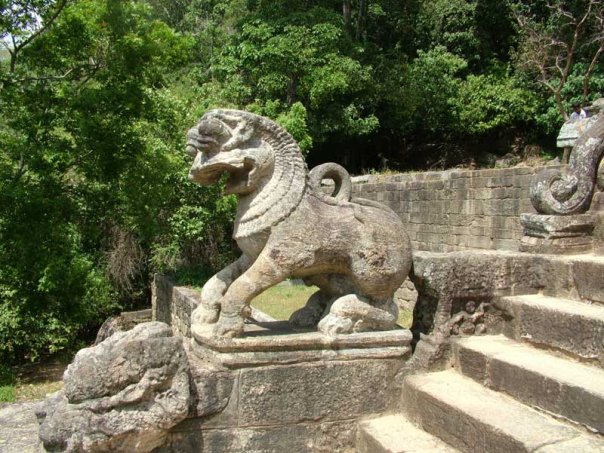
Yapahuwa's signature feature is a steep, elaborately carved stone staircase rising toward the summit, flanked by intricate stone latticework and guarded partway up by a famous carved stone lion — one of the finest examples of 13th-century Sinhalese stone carving.
2. Climbing to the Summit
Best for: Active travellers
Beyond the ornamental staircase, a rougher climb continues to the summit, where the ruins of the royal palace once stood. Fewer visitors make it this far, rewarding those who do with quiet views over the surrounding countryside.
3. Cave Temples and Later History
Best for: History enthusiasts
After its brief spell as capital, Yapahuwa's rock was repurposed as a Buddhist monastery, and cave shrines around its base reflect this later religious use, adding a layered history to the site beyond its royal-capital period.
4. A Quiet Cultural Triangle Stop
Best for: Travellers wanting to avoid crowds
Compared to Sigiriya or Dambulla, Yapahuwa sees a fraction of the visitors, offering a far quieter experience of similarly significant history and craftsmanship.
Practical Tips
- Best season: Year-round, though early morning avoids both heat and the exposed sections of the climb.
- Getting there: Around 45 km from Kurunegala, on the route between the Cultural Triangle's western approach roads.
- Getting around: Allow 1 to 1.5 hours to see the staircase, cave temples and summit.
- Entry/opening info: A modest entry fee applies for foreign visitors; sturdy shoes are recommended for the steep sections.
- Combine with: Dambulla Cave Temple and Sigiriya, both a reasonable drive further north.
Where to Stay near Yapahuwa Rock Fortress
Sigiriya, Dambulla and Kurunegala all offer convenient bases for visiting Yapahuwa as part of a wider Cultural Triangle itinerary. Browse verified Sigiriya and Cultural Triangle stays on SLAccommodation for easy access to the region's ancient sites.
Quick Facts
| Region | North Western Province (Cultural Triangle) |
| Famous for | Ornamental staircase, carved stone lion, brief royal capital |
| Nearby | Kurunegala, Dambulla, Sigiriya |
| Best season | Year-round |
| Distance from Colombo | ~150 km (~3.5 hrs) |
Frequently Asked Questions
Why was Yapahuwa briefly Sri Lanka's capital? The Sacred Tooth Relic was moved here for safekeeping during a period of South Indian invasions in the late 13th century, making it the seat of government for roughly two decades.
What is Yapahuwa's most famous feature? Its ornamental stone staircase, guarded by a finely carved stone lion, considered one of the best examples of 13th-century Sinhalese stonework.
Is Yapahuwa crowded with tourists? No, it receives far fewer visitors than Sigiriya or Dambulla, making it a good option for travellers seeking a quieter historical site.
Can Yapahuwa be combined with other Cultural Triangle sites? Yes, it's a reasonable stop on the route toward Dambulla and Sigiriya from Kurunegala or Colombo.