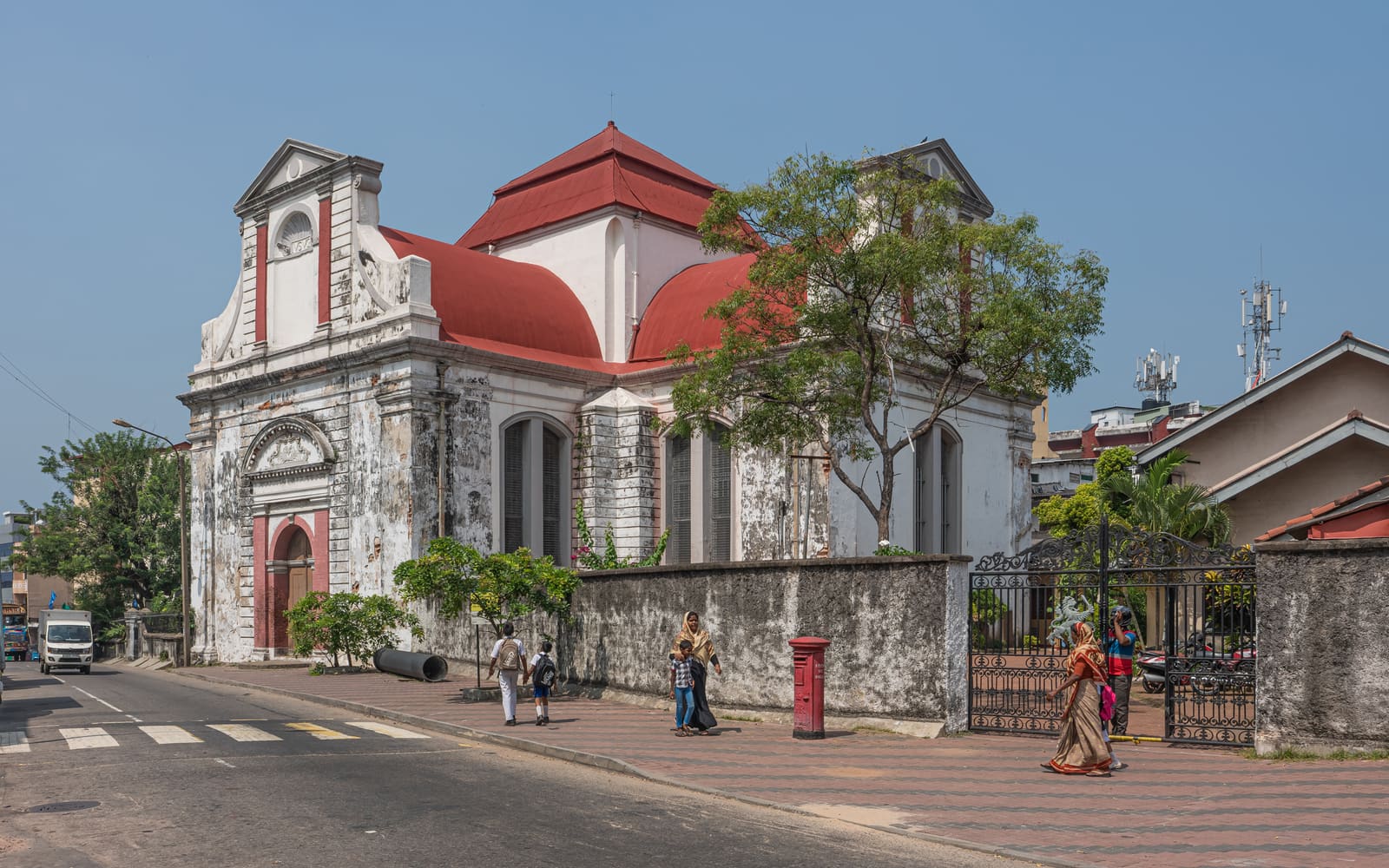
Wolvendaal Church: A Window into Dutch Colombo
Rising above a quiet hilltop in Colombo's Pettah area, Wolvendaal Church is one of the best-preserved reminders of the Dutch colonial period in Sri Lanka. Built in 1749, its solid coral-and-granite walls and distinctive cross-shaped floor plan have weathered nearly three centuries, and it remains an active Presbyterian church today. For history-minded travellers exploring Colombo's older quarters, it's a striking and little-visited stop.
1. The Cross-Shaped Architecture
Best for: Architecture enthusiasts
The church's Greek-cross floor plan and thick coral-block walls were designed to withstand the tropical climate, and the building's austere, symmetrical exterior is a good example of Dutch colonial ecclesiastical design in Asia.
2. Historic Gravestones and Memorials
Best for: History lovers
Inside and around the church lie the carved gravestones of Dutch colonial officials, complete with coats of arms and inscriptions in Dutch — a tangible link to the VOC (Dutch East India Company) era in Ceylon.
3. Original Furnishings
Best for: A quiet, contemplative visit
The church retains furnishings and fittings from the colonial period, including old pulpit and pew woodwork, giving the interior a well-preserved, atmospheric feel distinct from Colombo's newer buildings.
4. Pettah and Fort Neighbourhood
Best for: Combining with nearby sights
Wolvendaal sits between Pettah's bustling markets and the Colombo Fort area, making it easy to combine with a walk through the old town's colonial-era streets and the Dutch Hospital precinct.
Practical Tips
- Best season: Year-round; visit on weekdays for a quieter experience.
- Getting there: Located in the Wolvendaal/Pettah area of Colombo, reachable by tuk-tuk or taxi.
- Getting around: The church and its small graveyard are compact and easily explored on foot.
- Entry/opening info: The church may be open only at certain times outside services; checking ahead or asking a caretaker locally is worthwhile.
- Combine with: Pettah market streets and the Dutch Hospital Shopping Precinct in Colombo Fort.
Where to Stay near Wolvendaal Church
As a central Colombo landmark, Wolvendaal is best visited as part of a stay in the capital. Browse verified Colombo stays on SLAccommodation for easy access to Pettah, Fort and the rest of the city.
Quick Facts
| Region | Western Province (Colombo) |
| Famous for | 18th-century Dutch Reformed church, colonial gravestones |
| Nearby | Pettah Market, Dutch Hospital, Colombo Fort |
| Best season | Year-round |
| Distance from Colombo | In central Colombo |
Frequently Asked Questions
When was Wolvendaal Church built? It was constructed in 1749 during the Dutch colonial period and remains one of the oldest active Protestant churches in Sri Lanka.
What makes Wolvendaal Church architecturally distinctive? Its Greek-cross floor plan and thick coral-and-granite walls are hallmarks of Dutch colonial church design adapted for the tropical climate.
Can I combine a visit to Wolvendaal with other Colombo sights? Yes — it's close to Pettah's markets and the Dutch Hospital Shopping Precinct in Colombo Fort, making it easy to fit into a half-day walking tour of the old town.
Is Wolvendaal Church still in use? Yes, it remains an active Presbyterian church, so visiting hours may be more limited than at purely historical monuments.