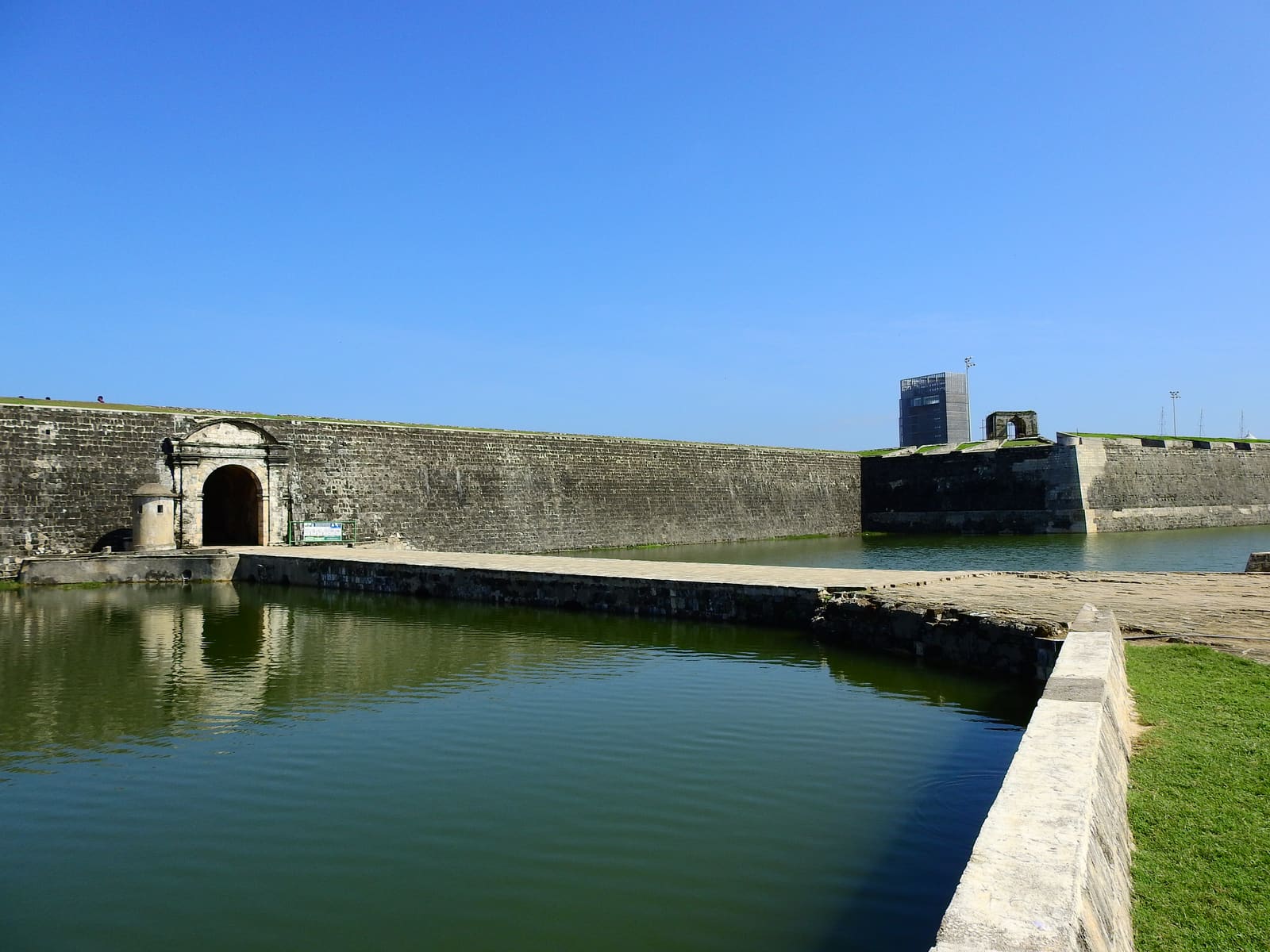
Jaffna Fort: Layers of Colonial History on the Lagoon
Originally built by the Portuguese in the early 17th century and later massively expanded by the Dutch, Jaffna Fort is one of the best-preserved examples of European fortress architecture in South Asia. Its star-shaped ramparts, extending out over the lagoon, have witnessed centuries of changing rule — Portuguese, Dutch, British and finally the Sri Lankan Civil War, which left much of the fort's interior in ruins that are still being restored.
1. The Star-Shaped Ramparts
Best for: History and architecture enthusiasts
The fort's defining feature is its distinctive star-shaped outline, an engineering approach designed to eliminate blind spots for defenders — a design shared with other Dutch colonial forts across Asia, but on an unusually large scale here.
2. Walking the Walls
Best for: Photographers and casual visitors
A walk along the top of the ramparts offers views over the surrounding lagoon and Jaffna town, especially pleasant in the cooler hours of early morning or late afternoon.
3. Civil War History
Best for: Those interested in modern Sri Lankan history
The fort saw heavy fighting during the civil war, and while restoration work has repaired much of the structure, some areas still bear visible scars — a sobering counterpoint to the fort's earlier colonial-era grandeur.
4. The Old Dutch Church and Ruins
Best for: Heritage enthusiasts
Within the fort's interior, the remains of a Dutch church and other colonial-era buildings offer glimpses of the fort's former role as a small self-contained garrison town, though much has been lost or is under ongoing restoration.
Practical Tips
- Best season: Year-round; the exposed ramparts are best walked in the cooler morning or evening hours.
- Getting there: Central Jaffna, an easy tuk-tuk ride or walk from the town centre.
- Getting around: The fort is large — allow an hour or more to walk the ramparts and explore the interior.
- Entry/opening info: A small entry fee typically applies; restoration work is ongoing, so some areas may be closed.
- Combine with: Nallur Kandaswamy Kovil and Jaffna's town centre and markets.
Where to Stay near Jaffna Fort
Jaffna town has a growing selection of guesthouses and hotels within easy reach of the fort and the lagoon. Browse verified Jaffna stays on SLAccommodation close to this historic corner of the city.
Quick Facts
| Region | Northern Province (Jaffna) |
| Famous for | Dutch star-shaped fort, colonial and civil war history |
| Nearby | Jaffna lagoon, Nallur Kandaswamy Kovil, Jaffna town centre |
| Best season | Year-round |
| Distance from Colombo | ~400 km (~7–8 hrs by road) |
Frequently Asked Questions
Who originally built Jaffna Fort? The Portuguese built the original fort in the early 17th century, before the Dutch significantly expanded it into the large star-shaped structure seen today.
Is Jaffna Fort still being restored? Yes, portions of the fort were damaged during the Sri Lankan Civil War and restoration work continues, so some interior areas may be closed to visitors.
How long does it take to visit Jaffna Fort? Most visitors spend around an hour walking the ramparts and exploring the interior at a relaxed pace.
Is Jaffna Fort close to other Jaffna attractions? Yes, it's within easy reach of Nallur Kandaswamy Kovil and Jaffna's town centre, making it easy to combine into a single day of sightseeing.