Gal Vihara: Buddha Carved Into the Living Rock
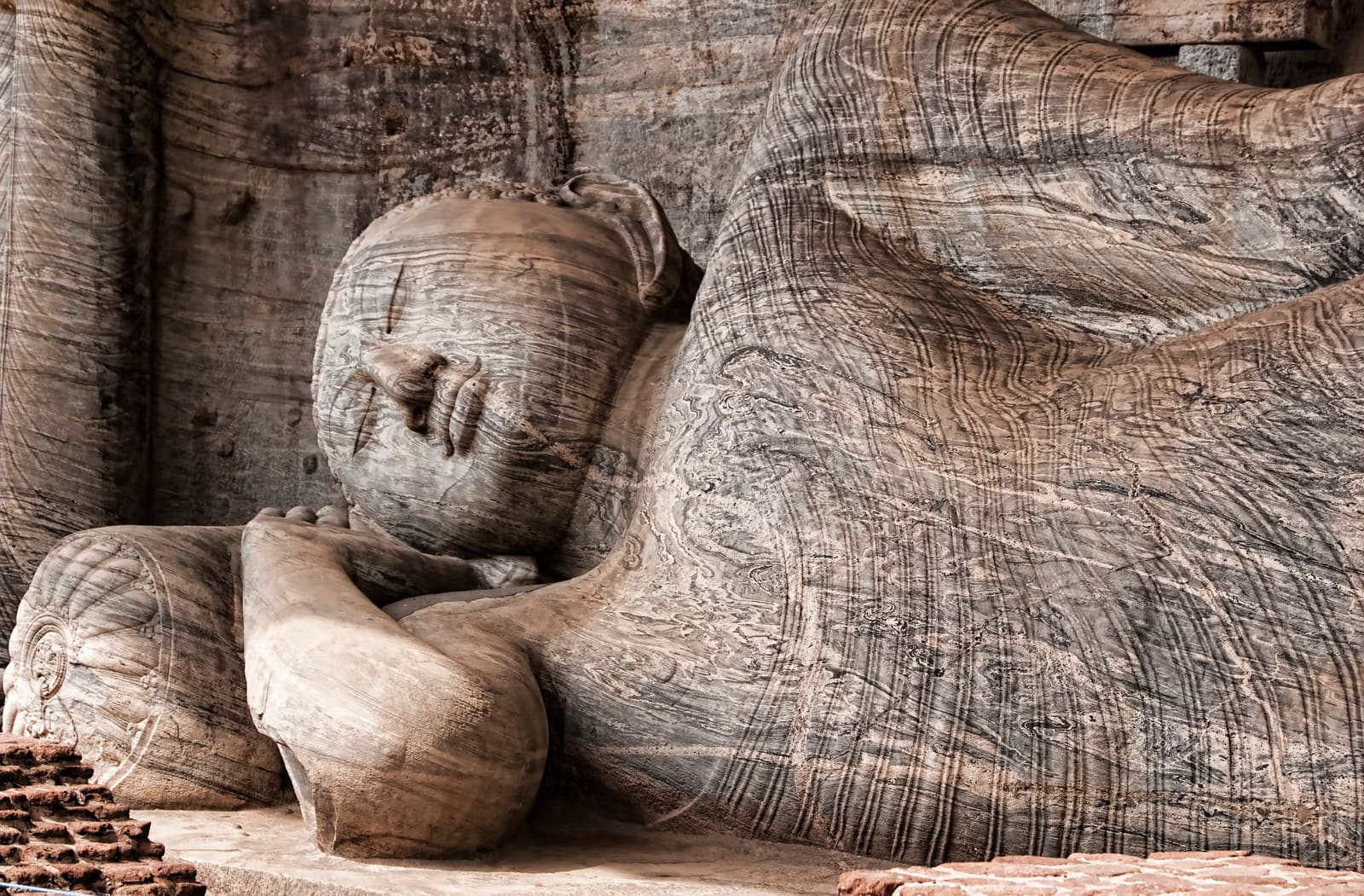
Gal Vihara, meaning "rock temple," is widely considered the finest example of rock-cut sculpture in Sri Lanka. Commissioned by King Parakramabahu I in the 12th century, four separate Buddha images — a colossal 14-metre reclining figure, a seated Buddha, a standing figure and a smaller seated image inside a rock chamber — were carved directly into a single sweeping granite outcrop.
The precision and serenity of the carvings, especially the famous reclining Buddha with its subtly indented pillow, have made this a highlight of any Polonnaruwa visit for centuries.
1. The Reclining Buddha
Best for: First-time visitors, photographers
At 14 metres long, the reclining Buddha depicts the moment of parinirvana. Look closely at the pillow beneath the head — it's carved with a slight depression, a subtle detail showing real weight resting on stone.
2. The Standing Buddha
Best for: Art historians
Nearly 7 metres tall, the standing figure's crossed-arm pose has puzzled scholars for years; some interpret it as a mourning Ananda rather than the Buddha himself, standing beside the reclining figure.
3. The Seated Buddha in the Rock Chamber
Best for: Those wanting the full sequence
A smaller seated Buddha sits within a shallow cave cut into the rock, flanked by carved reliefs, offering a more intimate scale compared with the giant outdoor figures.
4. The Meditating Seated Buddha
Best for: Quiet contemplation
Under a modest roofed shelter, another seated Buddha in deep meditation rounds out the group, its serene expression often cited as one of the finest in Sri Lankan Buddhist art.
Practical Tips
- Best season: Early morning visits give the best light for photography and avoid the worst midday heat on the open platform.
- Getting there: Gal Vihara sits within the Polonnaruwa ancient city, a short bicycle or tuk-tuk ride from the main ruins.
- Getting around: The site is compact — 30-45 minutes is enough, though queues can form for photos at peak times.
- Entry/opening info: Covered under the general Polonnaruwa ancient city ticket for foreign visitors; modest dress and shoe removal are required.
- Combine with: The Royal Palace ruins and Lankatilaka Vihara, both part of the same Polonnaruwa complex.
Where to Stay near Gal Vihara
Polonnaruwa town has a range of guesthouses and hotels close to the ancient city entrance, ideal for exploring Gal Vihara and the surrounding ruins. Browse verified Polonnaruwa stays on SLAccommodation for easy access.
Quick Facts
| Region | Cultural Triangle (North Central Province) |
| Famous for | Four monumental 12th-century rock-cut Buddha statues |
| Status | Part of the UNESCO World Heritage Site of Polonnaruwa |
| Nearby | Royal Palace ruins, Lankatilaka Vihara |
| Distance from Colombo | ~215 km (~4.5 hrs) |
Frequently Asked Questions
How old are the Gal Vihara statues? They date to the 12th century, commissioned during the reign of King Parakramabahu I.
Why is the standing Buddha's pose unusual? Its crossed arms have led some scholars to suggest it may depict a grieving Ananda rather than the Buddha, though this remains debated.
How much time should I allow at Gal Vihara? Around 30-45 minutes is typical, though photographers may want longer, especially in soft early-morning light.
Is Gal Vihara part of a bigger site? Yes, it's one stop within the wider Polonnaruwa ancient city, best combined with the Royal Palace and other nearby ruins.