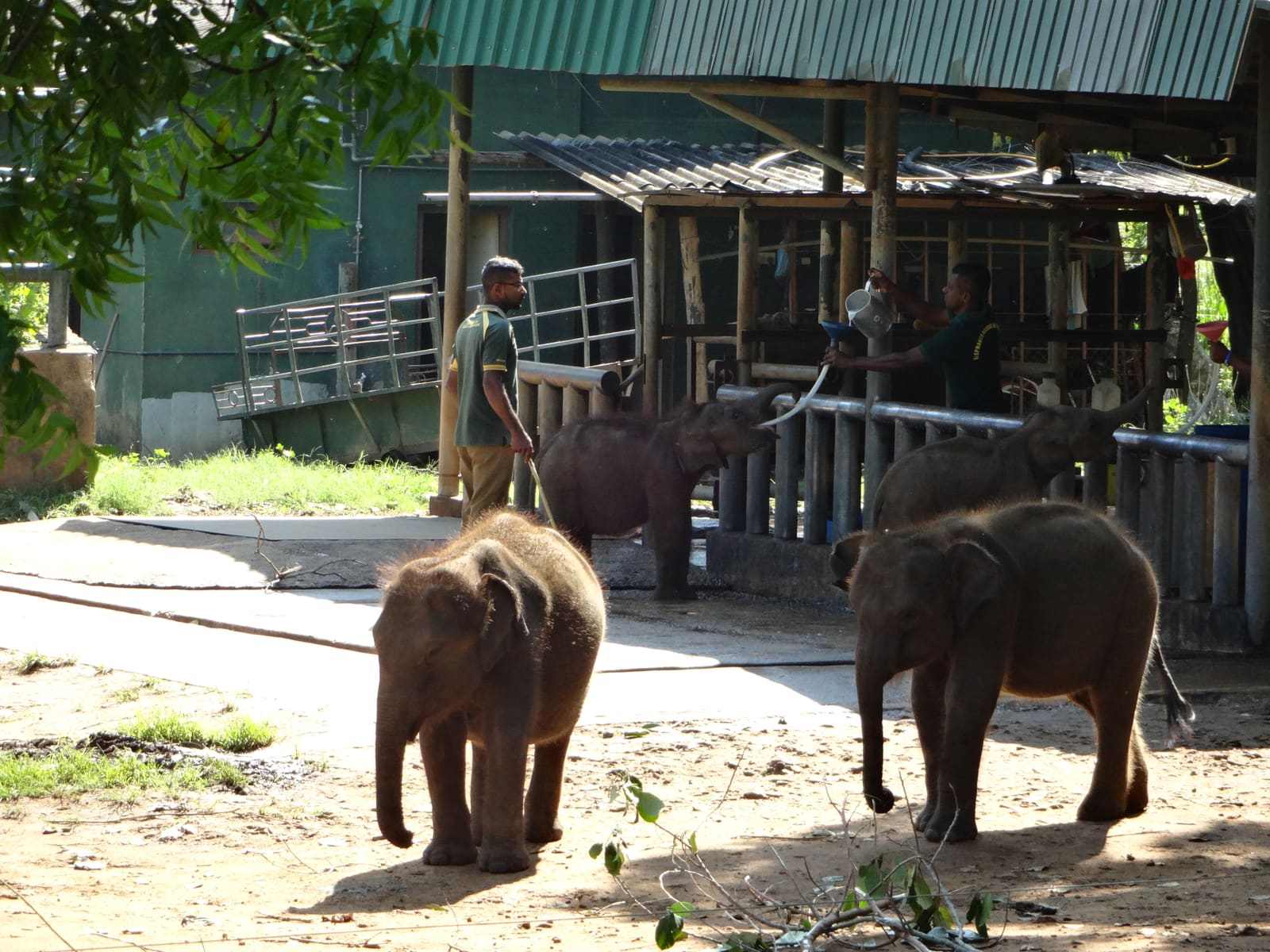
Elephant Transit Home: Raising Elephants for the Wild
Unlike Pinnawala's captive elephant orphanage, the Elephant Transit Home near Udawalawe National Park operates with a specific conservation goal: to rehabilitate orphaned, injured or abandoned elephant calves and release them back into the wild once they're old enough to survive independently. Run by Sri Lanka's Department of Wildlife Conservation, it deliberately limits human contact with the calves to preserve their wild instincts.
Visitors watch from a viewing platform rather than interacting directly with the elephants, a model designed to keep the animals genuinely wild rather than tame.
1. Bottle-Feeding Sessions
Best for: Families, first-time visitors
Several times a day, keepers bottle-feed the youngest calves in front of visitors from a raised viewing area — a popular and reliably scheduled highlight of any visit.
2. The Release Model
Best for: Conservation-minded travellers
Unlike facilities that keep elephants in captivity long-term, calves here are gradually prepared for release into Udawalawe National Park and other reserves once they reach an appropriate age and size.
3. Limited Human Interaction
Best for: Understanding responsible elephant tourism
Visitors don't get to touch or ride the elephants here, a deliberate choice that distinguishes this centre from more hands-on, and more ethically debated, elephant attractions elsewhere.
4. Combining with an Udawalawe Safari
Best for: A full day of elephant encounters
The Transit Home sits right beside Udawalawe National Park, making it easy to see a wild safari and a close-up feeding session in the same day.
Practical Tips
- Best season: Year-round; feeding times are fixed, so plan around the daily schedule rather than the season.
- Getting there: About 3-3.5 hours from Colombo, adjacent to Udawalawe National Park's entrance area.
- Getting around: The viewing platform is a short walk from the car park; check feeding times on arrival as they occur several times daily.
- Entry/opening info: A modest entry fee applies for foreign visitors; photography is permitted from the viewing platform.
- Combine with: A Udawalawe National Park safari, ideally on the same day given their proximity.
Where to Stay near the Elephant Transit Home
Udawalawe town has a range of guesthouses and safari lodges close to both the Transit Home and the national park entrance. Browse verified Udawalawe stays on SLAccommodation for your visit.
Quick Facts
| Region | Southern/Sabaragamuwa border (Udawalawe) |
| Famous for | Elephant calf rehabilitation and release, bottle-feeding sessions |
| Nearby | Udawalawe National Park |
| Best season | Year-round, check feeding schedule |
| Distance from Colombo | ~165 km (~3-3.5 hrs) |
Frequently Asked Questions
How is the Elephant Transit Home different from Pinnawala? Pinnawala keeps elephants in long-term captivity, while the Transit Home rehabilitates orphaned calves specifically for eventual release back into the wild.
Can visitors touch or feed the elephants directly? No, feeding is done by trained keepers, and visitors watch from a designated viewing platform to minimise human contact.
How many feeding sessions happen per day? Several are held daily at fixed times; checking the current schedule on arrival is recommended.
Can I combine a visit with a Udawalawe safari? Yes, the centre sits right next to Udawalawe National Park, making it easy to combine both in a single day.