Dambulla: 2,000 Years of Cave Art
The Dambulla Cave Temple — also called the Golden Temple — is the largest and best-preserved cave temple complex in Sri Lanka. Carved into a towering granite outcrop, its five caves shelter more than 150 Buddha statues and some 2,100 square metres of painted murals, many dating back over two millennia.
A UNESCO World Heritage Site at the heart of the Cultural Triangle, Dambulla pairs perfectly with nearby Sigiriya for a day of ancient wonders.
1. The Climb to the Caves
Best for: All visitors — it's the only way in
A flight of stone steps climbs the rock to the cave entrances. It's a moderate 15–20 minute walk uphill, rewarded with sweeping views over the plains toward Sigiriya. Watch for the resident troop of monkeys — keep food and loose items secure.
2. Cave Two — The Temple of the Great Kings
Best for: First-time visitors and photographers
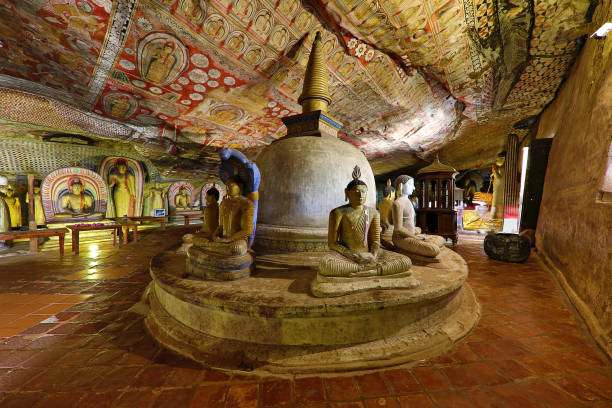
The second and largest cave, Maharaja Viharaya, is the showpiece. Its ceiling is covered in intricate frescoes of Buddhist stories, and the chamber holds dozens of seated and standing Buddha statues, a stupa, and a spring whose dripping water is considered sacred. The interplay of gold, ochre and shadow here is unforgettable.
3. The Reclining Buddhas
Best for: Quiet contemplation
Several caves contain large reclining Buddha statues carved directly from the living rock, depicting the Buddha's passing into nirvana. The serenity and scale of these figures, lit by shafts of natural light, give the temple its meditative atmosphere.
4. The Golden Temple & Museum
Best for: Families and casual visitors
At the base of the hill stands the modern Golden Temple, crowned by a giant golden Buddha statue visible from afar, with a small museum below. While newer and more touristic than the caves, it makes for a striking photo and a gentle introduction before the climb.
Practical Tips
- Tickets: Around LKR 2,000–2,500 for foreign visitors, bought at the base.
- Dress code: Shoulders and knees must be covered; shoes are removed at the cave entrance. Bring socks — the stone gets hot.
- Best time: Early morning or late afternoon to avoid heat and crowds.
- Getting there: Dambulla sits on the Colombo–Kandy–Trincomalee road junction, about 20 km from Sigiriya and 2 hours from Kandy.
- Combine with: Sigiriya Rock Fortress, the Dambulla wholesale market, and Minneriya safari.
Where to Stay in Dambulla
Dambulla is a convenient, central base for exploring the whole Cultural Triangle. Browse verified Dambulla accommodations on SLAccommodation, from budget guest houses to comfortable mid-range hotels with pools.
Quick Facts
| Region | Cultural Triangle (Central Province) |
| Famous for | 5 caves, 150+ Buddha statues, ancient murals |
| Status | UNESCO World Heritage Site |
| Age | Active temple for over 2,000 years |
| Distance from Sigiriya | ~20 km (~30 min) |
| Best time | Early morning or late afternoon |
Frequently Asked Questions
How much time do you need at Dambulla Cave Temple? Around 1.5 to 2 hours including the climb, all five caves and the views — longer if you linger over the murals.
Is there a dress code at Dambulla? Yes. As an active temple, shoulders and knees must be covered, and shoes are removed before entering the caves. Bring socks, as the stone floor gets very hot.
Can I visit Dambulla and Sigiriya in one day? Easily — they are only 20 km apart. Many travellers climb Sigiriya in the cool early morning and visit Dambulla's caves in the afternoon.
Are the Dambulla caves suitable for older travellers? The 15–20 minute uphill climb on stone steps is moderate. Take it slowly; there are spots to rest along the way.