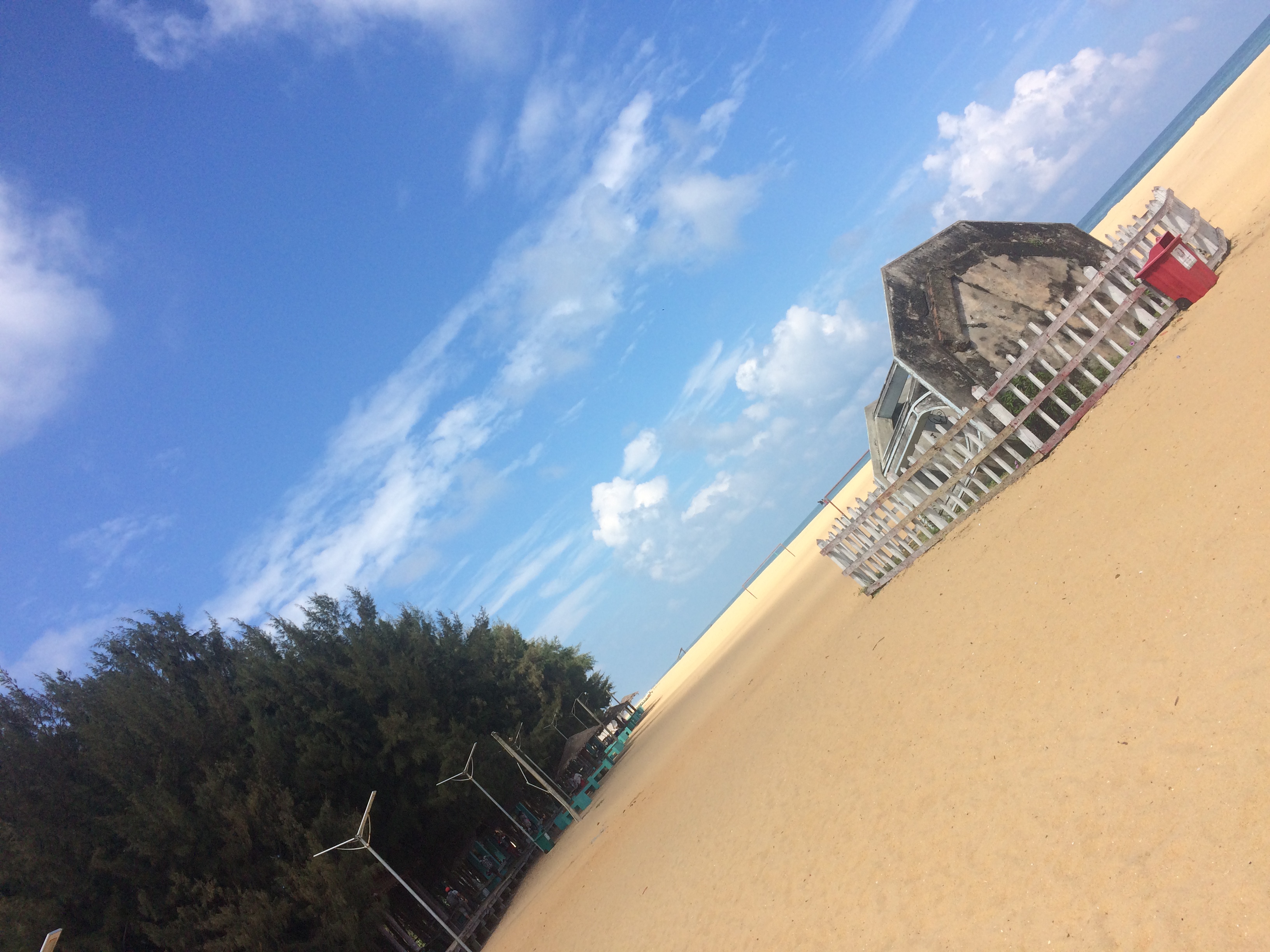
Batticaloa: A Lagoon Town With a Beach Attached
Batticaloa is defined less by a single postcard beach and more by its relationship with water — a large, calm lagoon separating the old town from Kallady, its beach suburb, connected by one of Sri Lanka's most storied bridges. It's a slower, less touristed introduction to the east coast, better known for its lagoon life, colonial-era fort and a curious local legend than for resort-style sand.
1. Kallady Beach
Best for: A quiet, local beach experience
Kallady, across the lagoon from the old town, has a long, relatively undeveloped beach that sees far fewer tourists than Nilaveli or Pasikuda further north, offering an unpolished, everyday side of the east coast.
2. The Batticaloa Lagoon and Singing Fish
Best for: A curious local legend
Batticaloa's lagoon is famous for its "singing fish" — a musical, humming sound reportedly heard from the water on still, moonlit nights, long attributed locally to fish or shellfish, though its exact source remains debated. Boat trips on the lagoon are the best way to experience the setting.
3. Kallady Bridge
Best for: A scenic link between town and beach
The bridge connecting old Batticaloa to Kallady spans the lagoon and offers pleasant views over the water, especially at sunset, and is a notable local landmark in its own right.
4. Batticaloa Fort and Old Town
Best for: A short cultural detour
The Dutch-era Batticaloa Fort, along with the old town's colonial-era streets, gives a glimpse into the region's layered Portuguese, Dutch and British colonial history before it became a quiet, lagoon-fringed corner of the east coast.
Practical Tips
- Best season: May to September for the driest, calmest conditions on the east coast.
- Getting there: About 7–8 hours from Colombo by road, or a shorter transfer via Batticaloa's domestic airport when flights operate.
- Getting around: Tuk-tuks cover the town and Kallady easily; boat trips are the best way to see the lagoon.
- Manage expectations: This is a working lagoon town rather than a polished resort beach — the appeal is its authenticity.
- Combine with: Kalkudah and Pasikuda further north, or Arugam Bay to the south.
Where to Stay in Batticaloa
Batticaloa has a modest but growing choice of guesthouses in the old town and along the Kallady beach side, well suited to travellers looking for a less-touristed east coast base. Browse verified Batticaloa stays on SLAccommodation to plan your visit.
Quick Facts
| Region | East coast |
| Famous for | Lagoon life, singing fish legend, Kallady beach and bridge |
| Nearby | Kalkudah, Pasikuda, Arugam Bay |
| Best season | May–September |
| Distance from Colombo | ~320 km (~7–8 hrs) |
Frequently Asked Questions
What are Batticaloa's "singing fish"? A local phenomenon where a musical, humming sound is reportedly heard from the lagoon on calm, moonlit nights, traditionally attributed to fish or shellfish, though the exact cause is still debated.
Is Kallady beach good for swimming? It's a relatively undeveloped, quiet beach rather than a polished resort destination — pleasant for a walk and a swim, but with fewer facilities than beaches further north like Pasikuda.
How do you get to Kallady from Batticaloa town? Via the Kallady Bridge, which spans the lagoon separating the old town from the beach suburb — a short, scenic crossing by tuk-tuk or on foot.
Why visit Batticaloa instead of Trincomalee or Pasikuda? For a quieter, less touristed introduction to the east coast, centred on lagoon life, colonial history and local culture rather than resort-style beaches.